
Hyrox trening: slik forbereder du kroppen og beskytter knær, ankler og håndledd
Slik trener du før Hyrox og beskytter knær, ankler og håndledd: hva de åtte stasjonene belaster, et opplegg på 8 til 12 uker og når knestøtte, anke...



For those who want active rehabilitation after an ankle sprain or want to strengthen a weak and unstable ankle.
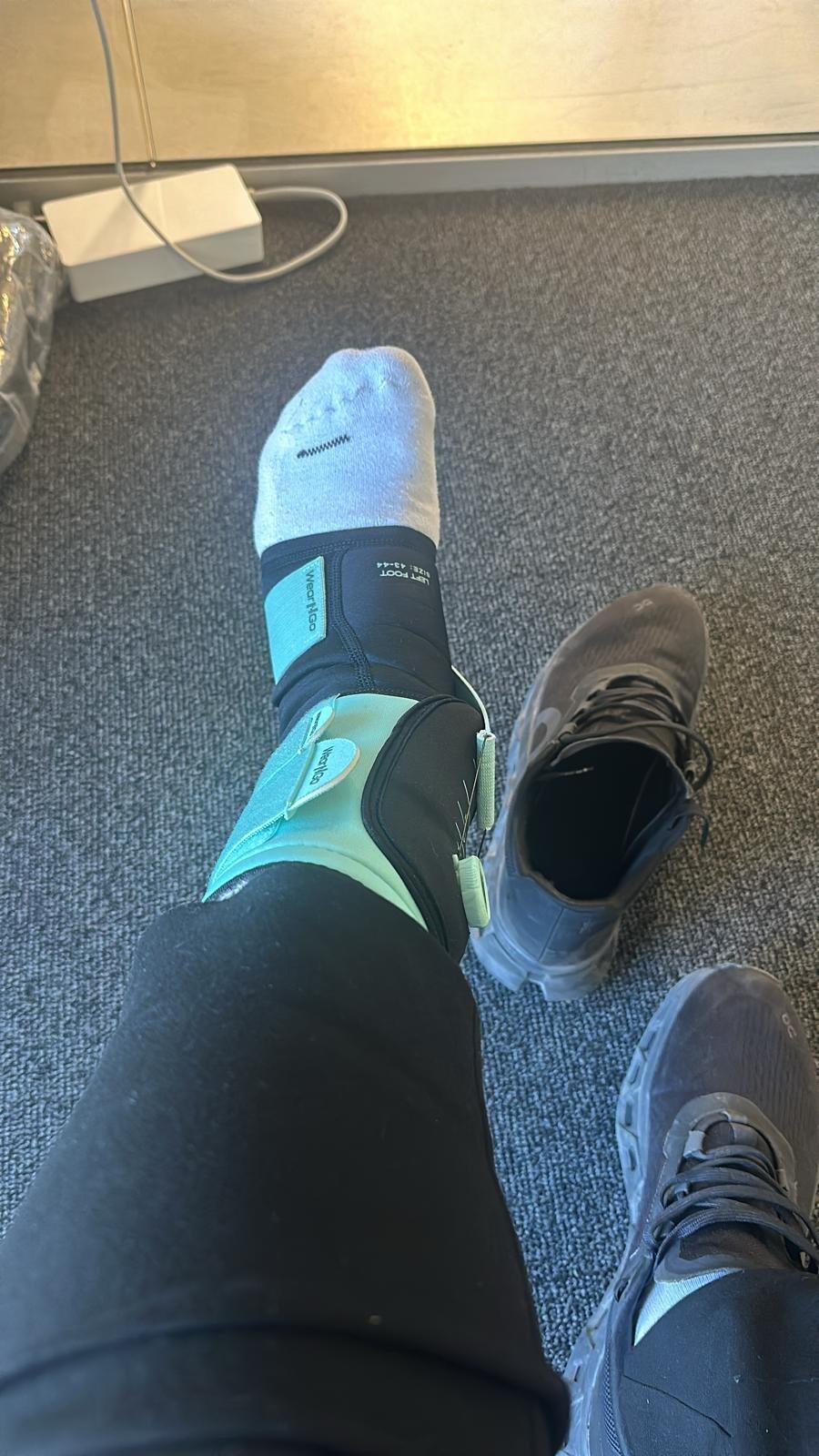
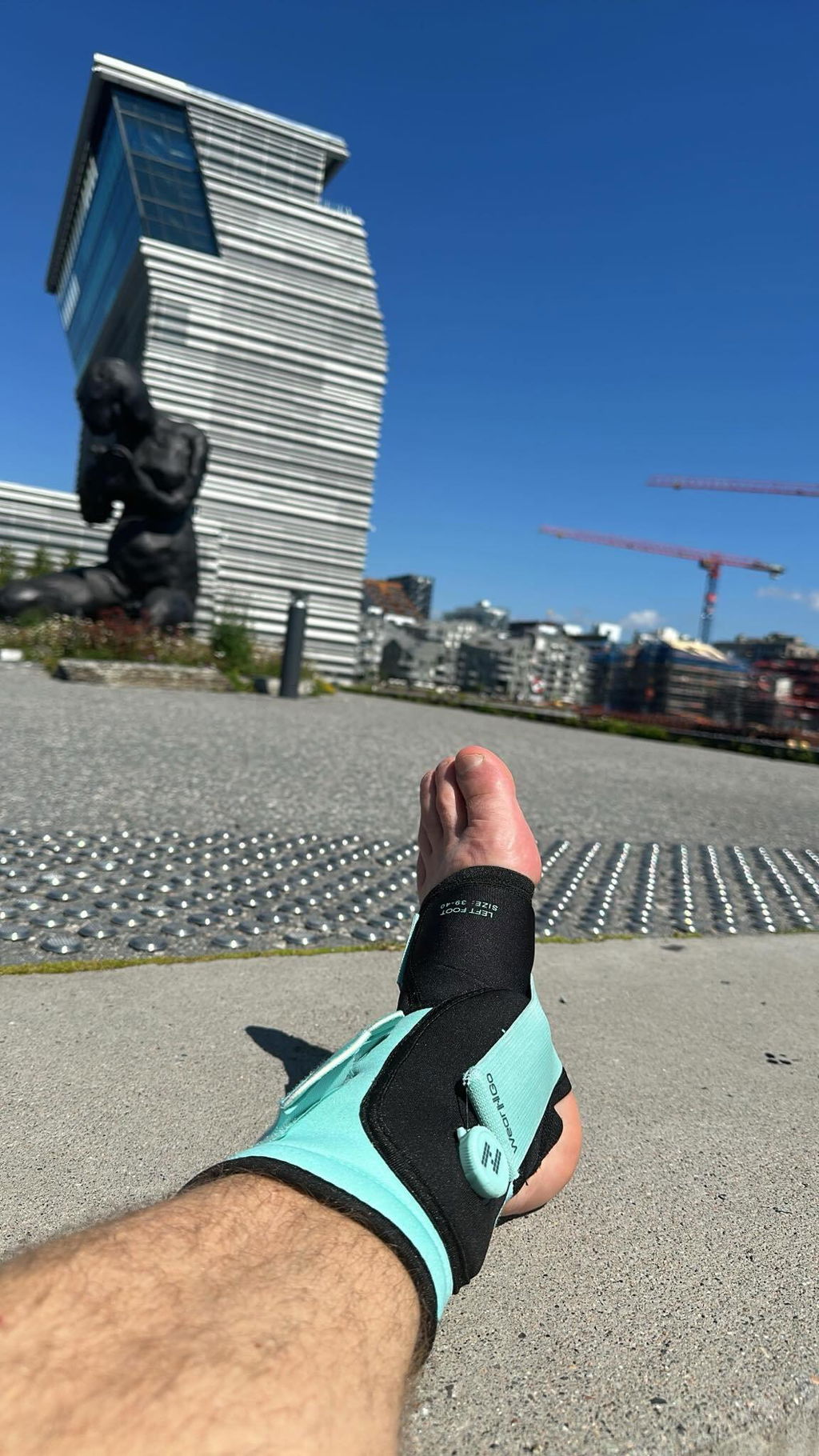
Wear’N’Go Ankle Trainer is a patented product, developed in Norway and for those who want active rehabilitation after an ankle sprain, or for those who want to strengthen a weak and unstable ankle. You get adjustable resistance that the ankle must actively work against while you walk. It stimulates not only the muscles around the ankle, but also proprioception and neuromuscular control, so the foot gradually gets better at registering and correcting its position in motion.


«Every year many people get injured, but far too few do anything about it. This can lead to serious
problems later in life. With Wear’N’Go we want to make retraining and injury prevention simple, so you can stay healthy and active.»

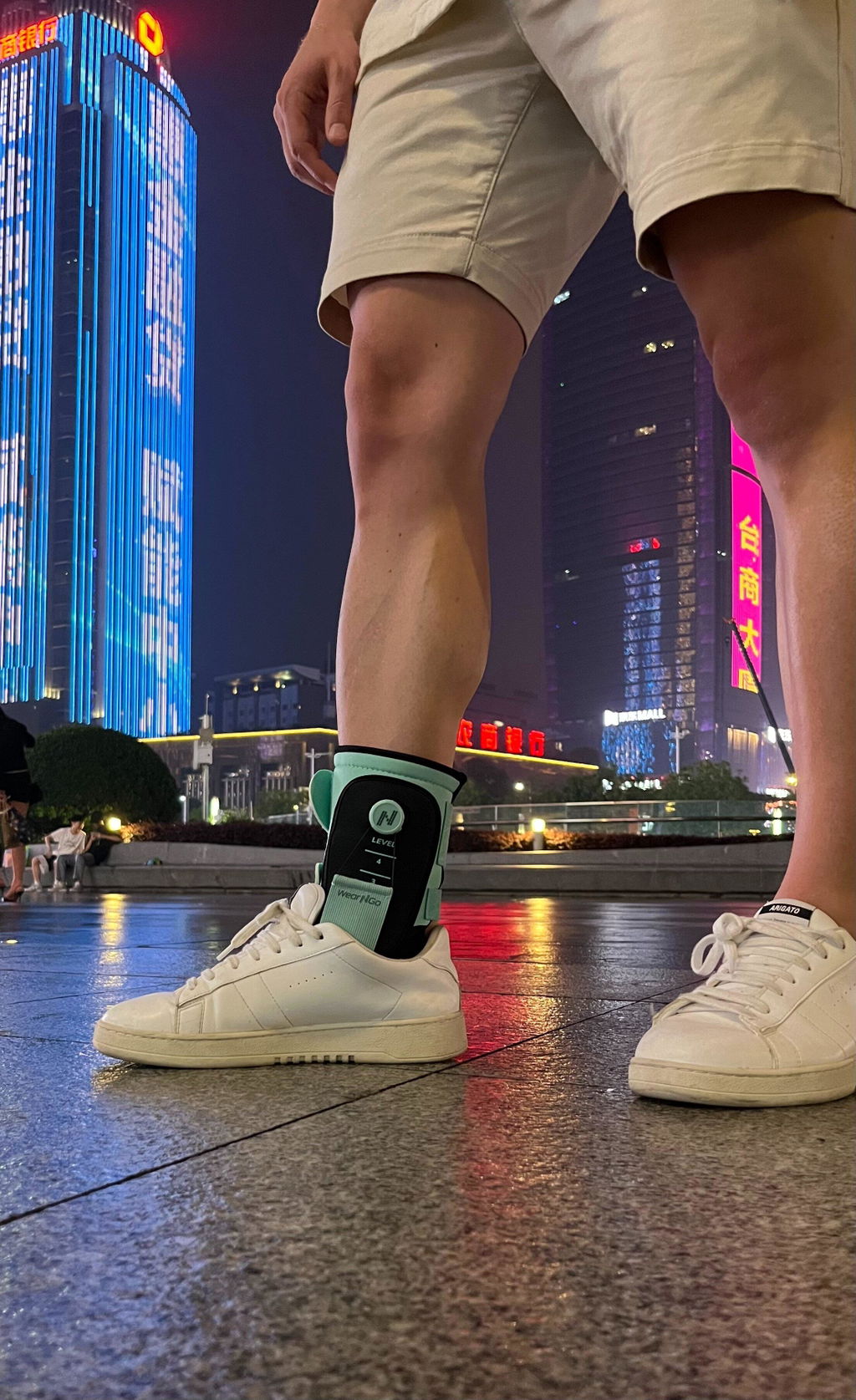
The Ankle Trainer is designed with resistance on the inside of the ankle. As you walk, the muscles on the outside of the ankle must actively work to bring the foot back to a more neutral position. The goal is not only to activate the muscles but also to stimulate joint proprioception and neuromuscular control around the ankle. Over time, this helps the ankle become better at registering and correcting the foot's position during movement.

If you have sprained your ankle once, the risk of doing it again is higher. Good rehabilitation is therefore important, but the challenge is that most people do not complete it. It is often not about the exercises being poor, but about the difficulty of fitting enough training into a busy daily life. Research shows that effective rehabilitation after an ankle sprain can require more than 900 minutes of training. That amounts to 15 hours – and for many, it is precisely the quantity and execution that becomes the problem. Ankle Trainer has been developed to make this easier in practice.

The Ankle Trainer is designed to integrate rehabilitation into everyday walking. Instead of having to set aside specific time for exercises, your ankle receives adjustable resistance that it must actively work against while you walk. This means you not only train the muscles around the ankle, but also proprioception and the body's ability to sense and correct the foot's position during movement. This makes rehabilitation easier to carry out over time – in situations you're already in, such as walking to work, shopping, or taking a stroll.

Measurements of muscle activity while walking with and without the Ankle Trainer showed increased activation in the fibularis longus and fibularis brevis when the product was in use.
The difference was most apparent during the swing phase – that is, in the part of the stride where the foot prepares to hit the ground. It is precisely in this phase that good control and pre-activation are important for better foot placement and to reduce the risk of the ankle ending up in a vulnerable position.
For you, this means that the Ankle Trainer doesn't just feel like exercise – it also provides measurable activation of the muscles around the ankle during walking. In the measurements, the difference in the swing phase was statistically significant, with p=0.002 for the fibularis longus and p=0.00005 for the fibularis brevis.

Ankle Trainer and Ankle Support are designed for two different needs – and many find both to be very useful. Ankle Trainer is Wear'N'Go's rehabilitation product for active ankle training. It is designed to stimulate muscles, joint proprioception, and neuromuscular control while you walk.
Ankle Support is developed for support, compression, comfort, and relief around the ankle. It is well-suited when you want more stability and security during activity, during periods of soreness, or when your ankle needs extra support.
Many therefore choose both: Ankle Trainer for active rehabilitation, and Ankle Support for stability, comfort, and relief when they are not using the Ankle Trainer.
Read more about why strength, stability, and good rehabilitation are important after a sprain – and how the ankle can be trained over time.
Ankle Trainer is intended to be used for 10 minutes to 3 hours at a time. Start slowly and gradually increase as your ankle tolerates more.
Research shows that effective rehabilitation after a sprain often requires more than 900 minutes of total exercise.
Ankle Trainer has been developed to make it easier to reach that training volume in practice – by moving the training into regular walking.
The Ankle Trainer is designed for active ankle rehabilitation while you walk. It provides adjustable resistance that your ankle must actively work against with every step. This stimulates the muscles around the ankle, proprioception, and neuromuscular control.
The Ankle Trainer is a rehabilitation product for active ankle rehabilitation. An ankle brace is designed for support, compression, and relief. Many people choose the Ankle Trainer for rehabilitation and an ankle brace for stability and comfort otherwise.
The size corresponds to your shoe size. For example, if you wear a size 43 shoe, the recommendation is 43–44 for the Wear'N'Go Ankle Trainer.
If you are between two sizes, it is generally better to go down than up.
If you are unsure about which size fits best, we are happy to help you via chat, email, or phone.
Yes, Ankle Trainer is designed to be used in most shoes and as part of normal walking.
Yes. Many people use Ankle Trainer for active rehabilitation and an Ankle Support when the ankle needs extra stability, comfort, and relief otherwise.
Kunder roser denne ankelrehabiliteringsenheten for effektivt å styrke anklene etter forstuinger og skader. Mange rapporterer betydelige forbedringer i stabilitet og redusert smerte, med en som sier «stabiliteten og styrken i ankelen min er betydelig forbedret.» Enheten er enkel å bruke under daglige aktiviteter. En kunde fant imidlertid at sokken gled for lett og strammingsalternativene var begrensede.
Har slitt med en ustabil ankel etter mange års håndballkarriere. Har nå brukt Ankle Trainer i flere uker, og det er første gang på mange år jeg føler at stabiliteten og stryken i ankelen er betydelig forbedret. Klarte til og med en to timers tennisøkt forrige uke uten å tråkker over. Anbefales.
Jeg har fikk prøve Ankle Trainer i sommer etter en overtråkk på fjelltur. I min lange aktive karriere som fotballspiller har jeg et "godt" forhold til ankelproblematikk. Jeg har hatt mine timer på balansebrett og andre tradisjonelle øvelser. Jeg kjenner jeg er blitt sterkere av denne sokken og vil fortsette å bruke Wear'N'Go som min trim og trening for å fremdeles kunne ha en aktiv fremtid.
Bruker denne for å forebygge ankelskader. Jeg bruker ofte Ankle Trainer i forkant av løpeøkter for å aktivere ankelen sin passe på funksjon og "gjøre" ankelen min klar for å løpe i utfordrende terreng.
Kanonprodukt
Tråkka over på vei ut døra...rett på sofaen med støttebandasje og høy benføring. Smerter, hevelse og blåfarge...så for meg lang tid med krykker og profesjonell hjelp til restitusjon. Fikk tips om ankeltreneren...og nå etter 2 mnd bruk er ankelen nesten god som ny...bare fortsetter litt med den for å få tilbake full styrke. Imponert over effekten!
Jeg har Ankle Trainer for en skade i ankelen som har gitt meg en bedre hverdag på jobb og fritiden. Har brukt den i lang tid og anbefaler den på det sterkeste.
Jeg har Ankle Trainer for en skade i ankelen som har gitt meg en bedre hverdag på jobb og fritiden. Har brukt den i lang tid og anbefaler den på det sterkeste.
Supert produkt som jeg brukte etter overtråkk. Kom kjapt tilbake i trening og opplever ankelen som sterkere enn før bruk av ankeltreneren. .
Seriøs og hyggelig firma. Klarte å bestille til feil fot side. Ringte inn og forklarte saken, hvor de ordnet opp med en gang.
Sokken glapp for lett, og strammemulighetene var for små. Ville ikke kjøpt igjen.
Hei Torgeir, takk for tilbakemeldingen. Vi har fornøydhetsgaranti, og vi bytter gjerne til en annen størrelse dersom den ikke passer deg.
Med vennlig hilsen Marcus
Jeg slet lenge med smerter i ankelen, spesielt om morgenen - det var nesten umulig å stå på foten uten ubehag. Etter å ha brukt Wear'N'Go Ankle Trainer i en måned, merker jeg utrolig forskjell! Nå kan jeg stå opp og sette foten rett i bakken uten problemer, og bevegeligheten min har forbedret seg betydelig. Produktet er enkelt å bruke, komfortabelt og har virkelig gjort en forskjell i hverdagen min. Anbefales på det sterkeste til alle som trenger rehabilitering for ankelen.
Etter operasjon i ankel (leddbånd og to sener) benytter jeg Ankle Trainer som en del av treningen i en lang (min 6 mnd) opptreningsperiode i tillegg til det ordinære programmet utarbeidet av fysioterapeuten. Ankle Trainer brukes daglig og oppleves som et godt supplement i treningsperioden.
Jeg var en idiot! Anbefalte kona å kjøpe denne i januar - og hun har hatt helt utrolig nytte av den. Jeg derimot? Ignorerte både produktet og mitt eget velmenende råd. Siden en idiotisk bedriftskamp i 1998 har jeg hatt gjentatte overtråkk - så vanlig at det knapt gjorde vondt lenger. I mai tråkket jeg igjen over på fjelltur, og kona sa tørt: Hvorfor bruker ikke du en sånn som meg? Jeg bruker den regelmessig og har siden jeg fikk den vært mer aktiv enn på flere år. Ikke ett eneste overtråkk siden jeg fikk den og stoler faktisk (nesten) på ankelen min igjen. Et magisk produkt - enkelt og genialt. Burde begynt for 25 år siden.
Jeg har Parkinsons sykdommen og er dyphjerne operert i 2018. Jeg har fått dystoni i min høyre fot, som er veldig ubehagelig. Foten min drar seg innover. Da jeg fikk beskjed om at dere skulle lage denne sokken fikk jeg ett håp om bedring til foten min. Jeg kjøpte derfor en Ankle Trainer som er lagd til venstre fot, som jeg bruker på motsatt fot (min høyre fot) for å rette ut høyrefoten min som drar seg innover. Jeg har blitt litt bedre. Tusen hjertelig takk for at dere kan hjelpe meg.
Bruker denne nesten daglig. Rask frakt og den har virkelig styrket anklene mine etter mange overtråkk. Utrolig fornøyd!
Supert produkt som jeg brukte mye i rehabiliteringen etter overtråkk på padel. Anbefales om du har lyst til å unngå nye overtråkk eller feilbelastninger.
Kjøpt til fire spillere med ankelskade. Fantastisk hjelpemiddel i rehabiliteringen.
Jeg var så uheldig å brekke to bein i leggen min våren 2022 (tre år siden i dag) og ble gipset for 6 uker! Da de tok av gipsen hadde jeg fortsatt vanvittige smerter og ble etter kort tid diagnostisert med CRPS (kronisk regionalt smertesyndrom) - også kaldt «Selvmordssyndromet». Kampen tilbake har vært lange og krevende treningsprosesser samt utstrakt bruk av fysioterapi, men etter at jeg nå har begynt å bruke dette produktet annen hver dag mens jeg gjør helt vanlige hverdagsaktiviteter - kan jeg vedlikeholde treningen helt «ubevisst» og kjenner ikke lenger spor av det inntrufne! Jeg føler meg så heldig og takknemlig - og tusen takk for «oppfinnelsen»!
Som mangeårig idrettsutøver med flere overtråkk bak meg, har jeg fått problemer med både vonde og ustabile ankler. Wear'N'Go har gjort at jeg får aktivert ankelen på en veldig enkel og effektiv måte. Jeg er lat av natur, og 'hjemmeleksen' fra fysioterapeuten har dessverre ikke blitt gjennomført ofte nok. Nå bruker jeg gjerne Wear'N'Go i 10-15 minutter med høy motstand rett før trening, og kjenner at jeg får veldig god kontakt med ankelen. Anbefales!
Vi som klubb har hatt veldig god erfaring med produktet. Spillerne forteller at de føler at ankelen jobber og at muskulaturen blir trent, og at de faktisk merker at de blir slitene ettersom de kan stille på intensiteten på produktet. Vi har brukt Ankle Trainer i opptreningen til spillere som enten har hatt en akutt ankelskade eller etter ankeloperasjon. Spillerne har brukt produktet når de gjør vanlige ting, slik som når de har gått rundt på klubbhuset/trent styrke. En fin ting med produktet er at man får inn det proprioseptiske. Spilleren får en propriseptisk stimuli i hvert steg som tas med produktet på. Dette er noe som er vanskelig å få inn i øvelser.
Etter en kraftig overtråkk på futsalbanen i 2023 slet jeg lenge med smerter i ankelen. Rehabilitetsøvelser daglig hjalp mye, men med Ankle Trainer fra Wear'N'Go slipper jeg alt det. I jobben som elektriker går jeg mange fler skritt sammenlignet med en kontorarbeider, og med Ankle Trainer på styrkes ankelmuskulaturen samtidig som jeg får gjort jobben. Ankelen er i dag mye sterkere og bedre, og jeg anbefaler å ta den i bruk selv før en stygg overtråkk, dersom uhellet er ute.
Jeg er veldig fornøyd med produktet og bruker det på vei til og fra trening. Jeg har følt stor endring i min ankels styrke og stabilitet, og jeg har ikke tråkket over etter jeg har begynt å bruke den fast.
Slik trener du før Hyrox og beskytter knær, ankler og håndledd: hva de åtte stasjonene belaster, et opplegg på 8 til 12 uker og når knestøtte, anke...

Slik velger du riktig håndleddstøtte til trening, jobb og hverdag. Se forskjellen på kompresjonsstøtte og skinne, og når du bør bruke hva.

Hva gjør en støtte, når hjelper den, og hva skiller den fra opptrening? Guide til støtte for kne, ankel, albue og håndledd, utviklet i samarbeid me...